
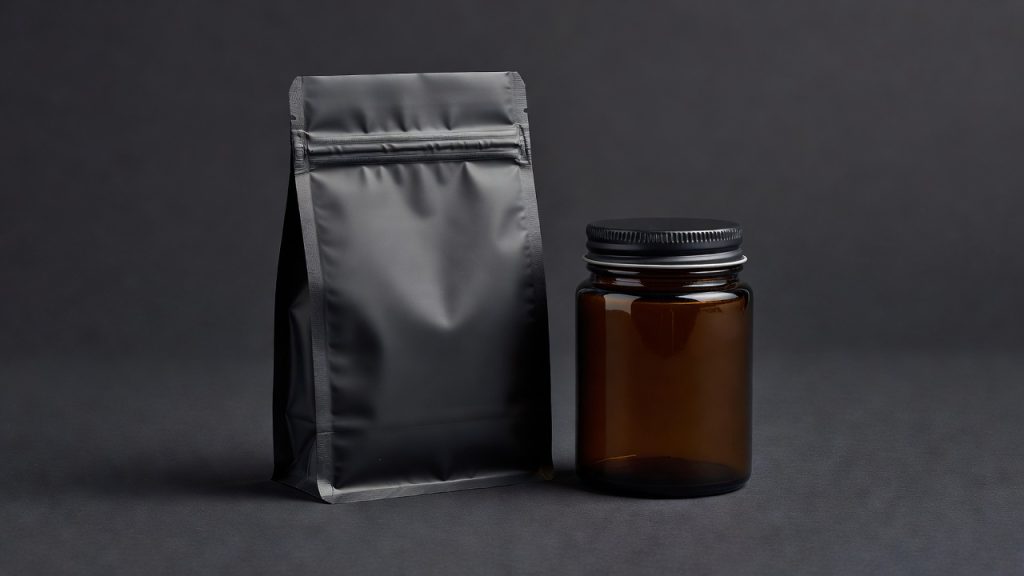
Commercial cannabis flower begins deteriorating the moment the curing phase concludes. Without precise environmental containment, oxidation converts active Δ9-tetrahydrocannabinol (Δ9-THC) into cannabinol (CBN), volatile monoterpenes evaporate into container headspace, and uncontrolled ambient moisture threatens biological compliance. For licensed cultivators and dispensary brands, extended inventory hold times make secondary and primary packaging performance a critical operational variable rather than a cosmetic consideration.
Protecting flower freshness at commercial scale requires an engineering-driven approach to packaging substrates. By evaluating Water Vapor Transmission Rates (WVTR), Oxygen Transmission Rates (OTR), light shielding, and closure hermeticity, procurement managers can engineer stability protocols that protect margins, preserve batch testing potency, and satisfy child-resistant (CR) statutory mandates.
Biochemical Degradation Pathways in Stored Flower
Preserving wholesale and retail cannabis requires arresting three distinct physical degradation mechanisms: moisture exchange, oxidative breakdown, and photochemical reactions. Cured flower equilibrates rapidly with its surrounding atmosphere. When packaged flower is exposed to ambient relative humidity (RH) above 65%, the water activity (aw) exceeds the critical 0.65 threshold defined by ASTM D8197, dramatically increasing the probability of fungal spore germination (such as Aspergillus and Penicillium). Conversely, exposure to dry atmospheric air strips moisture until aw falls below 0.55, causing trichome gland heads to become brittle, fracture, and lose structural integrity.
Simultaneously, oxygen transmission drives chemical degradation. Exposure to molecular oxygen catalytically degrades Δ9-THC into CBN, causing loss of intended strain potency and altering psychoactive performance. Light exposure—particularly high-energy ultraviolet radiation between 290 nm and 400 nm—accelerates this breakdown by breaking double bonds in terpene and cannabinoid structures. Preventing these reactions requires packaging formats that block UV transmission completely and establish a near-zero gas exchange barrier between the internal headspace and external warehouse or retail dispensary environments.
Barrier Substrates: WVTR, OTR, and Material Selection
Not all packaging materials deliver acceptable barrier properties for long-term flower retention. Standard single-polymer polyethylene (PE) or polypropylene (PP) containers possess microscopic porosity that allows gas and vapor exchange over 30- to 90-day retail cycles. Commercial brands targeting extended shelf stability must evaluate materials based on verified laboratory metrics:
- Water Vapor Transmission Rate (WVTR): Measured in g/m²/day under ASTM F1249 conditions. High-performance flower packaging should maintain a WVTR below 0.5 g/m²/day to prevent dehydration or ambient humidity ingress.
- Oxygen Transmission Rate (OTR): Measured in cc/m²/day under ASTM D3985 standards. Premium flower barrier laminates should deliver an OTR under 1.0 cc/m²/day to arrest the oxidation of cannabinoids and monoterpenes like myrcene, terpinolene, and pinene.
Flexible barrier pouches constructed with multi-layer foil laminates—typically incorporating oriented polyester (PET), aluminum foil (AL) or vacuum-metallized PET (VMPET), and linear low-density polyethylene (LLDPE)—provide near-impermeable barriers against both moisture and oxygen. Glass remains an industry baseline for rigid packaging due to its zero-OTR and zero-WVTR properties, but it requires opaque pigments or amber tints to filter UV light, alongside specialized hermetic liner systems at the closure interface.
Packaging Substrate Performance Comparison
Selecting the optimal container format involves weighing gas barrier capabilities, mechanical protection, closure security, and operational production efficiency. The following table outlines standard performance benchmarks across common commercial packaging formats.
| Packaging Substrate | Barrier Rating (WVTR / OTR) | UV Protection | Closure Seal Mechanism | Target Stability Window |
|---|---|---|---|---|
| Multi-Layer Foil Pouch (PET/AL/LLDPE) | Near Zero (<0.05 g/m² / <0.05 cc/m²) | 100% Total Opacity | Certified CR Zipper + Hermetic Heat Seal | 9 to 18 Months |
| Metallized Film Pouch (PET/VMPET/PE) | Moderate-High (<0.5 g/m² / <1.0 cc/m²) | >98% Light Barrier | Certified CR Zipper + Hermetic Heat Seal | 6 to 12 Months |
| Flint Glass with Lined CR Cap | Substrate Zero / Liner Dependent | Poor (<10% UV Block) | Continuous Thread (CT) + Induction / PTFE Liner | 3 to 6 Months (Light-Limited) |
| Amber/Opaque Glass with Lined CR Cap | Substrate Zero / Liner Dependent | High (>90% UV Block) | Continuous Thread (CT) + Induction / PTFE Liner | 9 to 15 Months |
| Molded Polypropylene (PP) Jar | Low-Moderate (>1.5 g/m² / >25 cc/m²) | Variable (Additive Dependent) | Push-and-Turn CR with Foam Liner | 2 to 4 Months |
Closure Integrity and Regulatory Compliance
A package’s barrier rating is only as robust as its closure seal. For rigid containers, standard expanded polyethylene (EPE) foam liners provide minimal gas retention once torqued down. Brands shipping flower to regional distributors should specify induction heat-seal liners or closures lined with polytetrafluoroethylene (PTFE) or polyvinylidene chloride (PVDC) facing to secure hermetic storage until initial consumer breach.
Simultaneously, primary consumer packaging must satisfy Poison Prevention Packaging Act protocols under 16 CFR § 1700.20, evaluated via ASTM D3475 standards for child resistance. Flexible pouches must integrate certified child-resistant press-to-close zippers, while rigid containers utilize push-and-turn or squeeze-and-turn mechanisms. The engineering challenge lies in balancing rigorous child-resistant engagement with elder-friendly accessibility, all while maintaining continuous gasket pressure to prevent headspace gas exchange.
Procurement Planning: Lead Times and Operational Fit
When selecting packaging substrates, supply chain buyers must factor in batch run sizes, machinery compatibility, and operational lead times. High-barrier flexible laminates offer significant logistical benefits, requiring up to 80% less pallet storage space than empty glass containers. Digital short-run pouches generally require minimum order quantities (MOQs) starting between 2,000 and 5,000 units with 3- to 4-week lead times, making them well-suited for limited-run genetics. High-volume flexographic runs reduce unit costs substantially at 25,000+ unit MOQs but require 8- to 12-week production lead cycles.
For glass and rigid formats, case pack volumes, breakage tolerances during automated filling, and the cost of induction-sealing equipment must be calculated into the total packaging cost. Regardless of format, pairing high-barrier packaging with calibrated two-way humidity control packs (formulated to maintain 58% or 62% RH) buffers headspace moisture swings and extends sellable retail shelf life across diverse dispensary distribution networks.
Explore our inventory of certified packaging formats in our packaging catalog, or contact our technical team to evaluate barrier specifications, request child-resistant compliance test reports, or schedule sample testing for your brand’s flower SKUs.